
Many businesses focus heavily on growth without investing sufficiently in operational infrastructure.
This creates long-term risk.
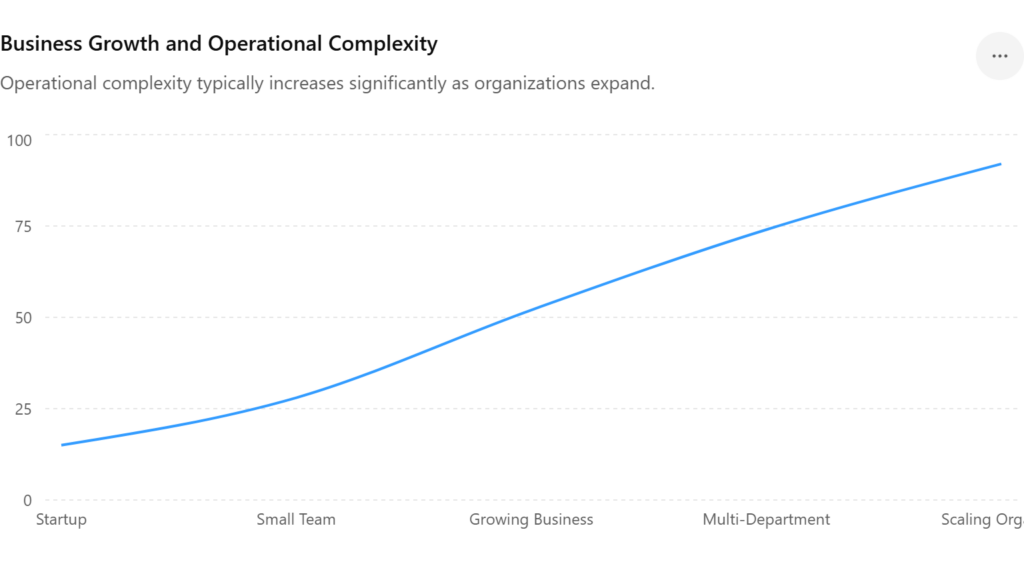
Growth increases operational complexity. Without operational strategy, businesses may struggle to maintain consistency, customer service quality, employee accountability, and workflow coordination during expansion.
Sustainable business growth requires operational scalability.
Scalable organizations develop systems capable of supporting increasing operational demands without creating organizational instability.
Operational strategy supports scalability through:
- Process standardization
- Organizational structure
- Workflow optimization
- Leadership coordination
- Performance visibility
- Resource allocation
- Operational planning
Businesses with weak operational systems often encounter growth-related instability because organizational complexity begins exceeding operational capacity.
Common signs include:
- Increased employee turnover
- Customer complaints
- Declining operational efficiency
- Leadership overload
- Financial inconsistencies
- Reduced organizational accountability
Operational strategy helps businesses grow more sustainably by strengthening operational foundations before organizational complexity becomes unmanageable.
| Business Area | Weak Operational Strategy | Strong Operational Strategy |
|---|---|---|
| Employee Productivity | Inconsistent | Structured & Measurable |
| Workflow Coordination | Delayed | Streamlined |
| Leadership Alignment | Reactive | Strategic |
| Customer Experience | Inconsistent | Reliable |
| Operational Efficiency | Reduced | Improved |
| Scalability | Difficult | Sustainable |
| Accountability | Unclear | Defined |
| Decision-Making | Slower | Faster |
Financial Performance Is Closely Connected to Operations
Operational performance and financial performance are closely connected.
Operational inefficiencies often create hidden financial costs that accumulate gradually over time.
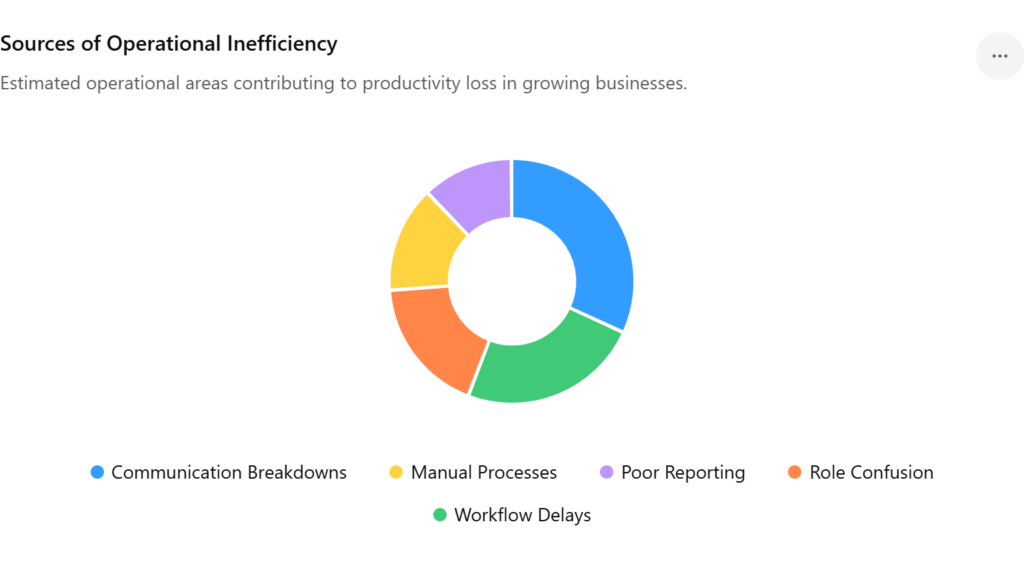
Poor operational structure may contribute to:
- Lost productivity
- Workflow delays
- Employee turnover costs
- Customer attrition
- Increased labor inefficiency
- Reduced profitability
- Administrative waste
- Project overruns
Businesses sometimes focus exclusively on revenue growth while overlooking operational inefficiencies that quietly reduce profitability.
Operational strategy helps organizations improve financial performance by identifying operational weaknesses that negatively affect productivity and efficiency.
For example, improving workflow coordination may reduce labor inefficiencies. Strengthening reporting systems may improve operational visibility. Clarifying accountability structures may reduce costly operational errors.
Strong operational strategy supports better financial decision-making because leadership teams gain greater visibility into organizational performance.
Technology Alone Does Not Build Strong Operations
Many businesses assume operational problems can be solved simply by implementing additional software systems or digital tools.
Technology can improve efficiency, but technology alone does not create operational strategy.
Without operational structure, technology may actually increase organizational complexity.
Businesses often implement multiple platforms, communication systems, project management tools, and reporting applications without clearly defining how operational workflows should function.
This frequently creates additional confusion rather than operational improvement.
| Operational Warning Sign | Business Impact |
|---|---|
| Employees constantly asking for clarification | Reduced productivity |
| Departments operating independently | Organizational silos |
| Leadership repeatedly correcting errors | Operational instability |
| Frequent customer complaints | Reputation risk |
| Delayed project completion | Reduced profitability |
| Excessive meetings with little execution | Time inefficiency |
| Workflow bottlenecks | Slower growth |
| High employee turnover | Increased operational cost |
Operational strategy should guide technology implementation rather than the reverse.
Technology is most effective when businesses first establish:
- Workflow clarity
- Communication structure
- Accountability systems
- Reporting standards
- Leadership alignment
- Operational priorities
Operational discipline remains essential regardless of technological capability.
Stronger Businesses Are Built Through Operational Discipline
Building a stronger business requires more than short-term revenue growth.
Long-term organizational success depends on operational discipline, strategic leadership, communication consistency, workflow efficiency, and organizational adaptability.
Operational strategy provides the structure necessary for businesses to function effectively as organizational complexity increases.
Businesses that invest in operational improvement often position themselves for:
- Greater organizational stability
- Improved operational efficiency
- Better employee performance
- Stronger leadership alignment
- Improved customer experience
- Sustainable business growth
- Enhanced profitability
Operational strategy is not limited to large enterprises. It is equally important for healthcare organizations, dental practices, professional service firms, consulting businesses, and growing companies seeking long-term operational success.
Strong businesses are not built solely through ambition. They are built through structured execution, operational clarity, and disciplined organizational strategy.
Conclusion
Operational strategy plays a critical role in building stronger, more sustainable businesses.
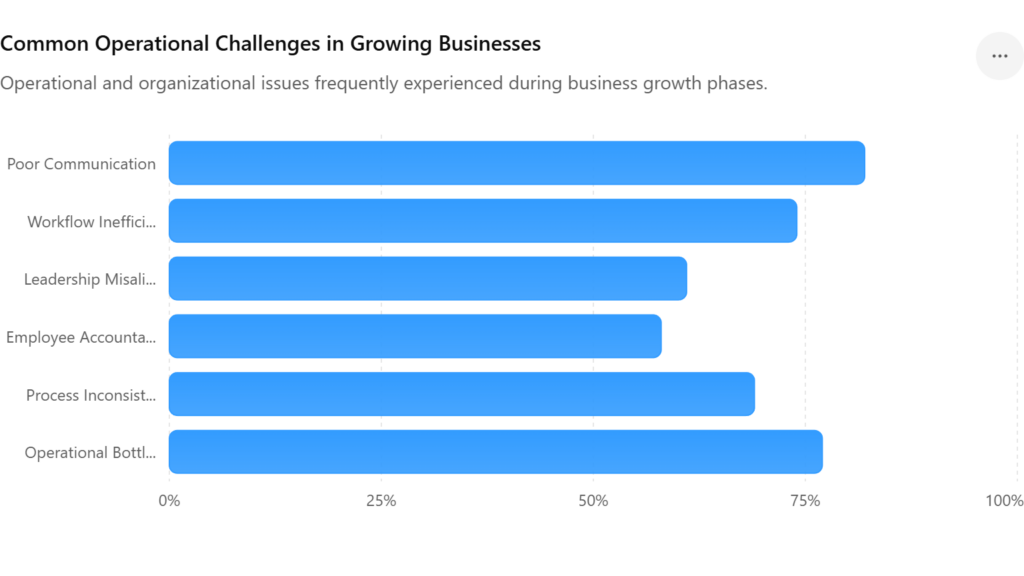
As organizations grow, operational complexity increases. Without operational structure, businesses may experience workflow inefficiencies, communication breakdowns, leadership misalignment, reduced productivity, and declining organizational performance.
Strong operational strategy supports organizational stability, workflow efficiency, employee accountability, leadership coordination, and long-term scalability.
Businesses that proactively strengthen operational systems are often better positioned to adapt, grow sustainably, and maintain long-term competitive strength.
Operational success is rarely accidental. It is typically the result of intentional planning, disciplined execution, and strong organizational strategy.
Growing businesses often require more than technical expertise or revenue growth strategies. Sustainable success depends on operational structure, organizational alignment, workflow efficiency, and long-term strategic planning.
California Business Consulting works with healthcare organizations, dental practices, medical offices, professional firms, and growing businesses seeking operational improvement, strategic planning, business process optimization, and organizational performance support.
To discuss your business operations, workflow structure, or growth strategy, contact California Business Consulting at (310) 541-1000 to schedule a confidential consultation with Dr. Michael Kamali, DBA, MBA, ChFC.